See prices From 70 EUR · Free cancellation available
Contents
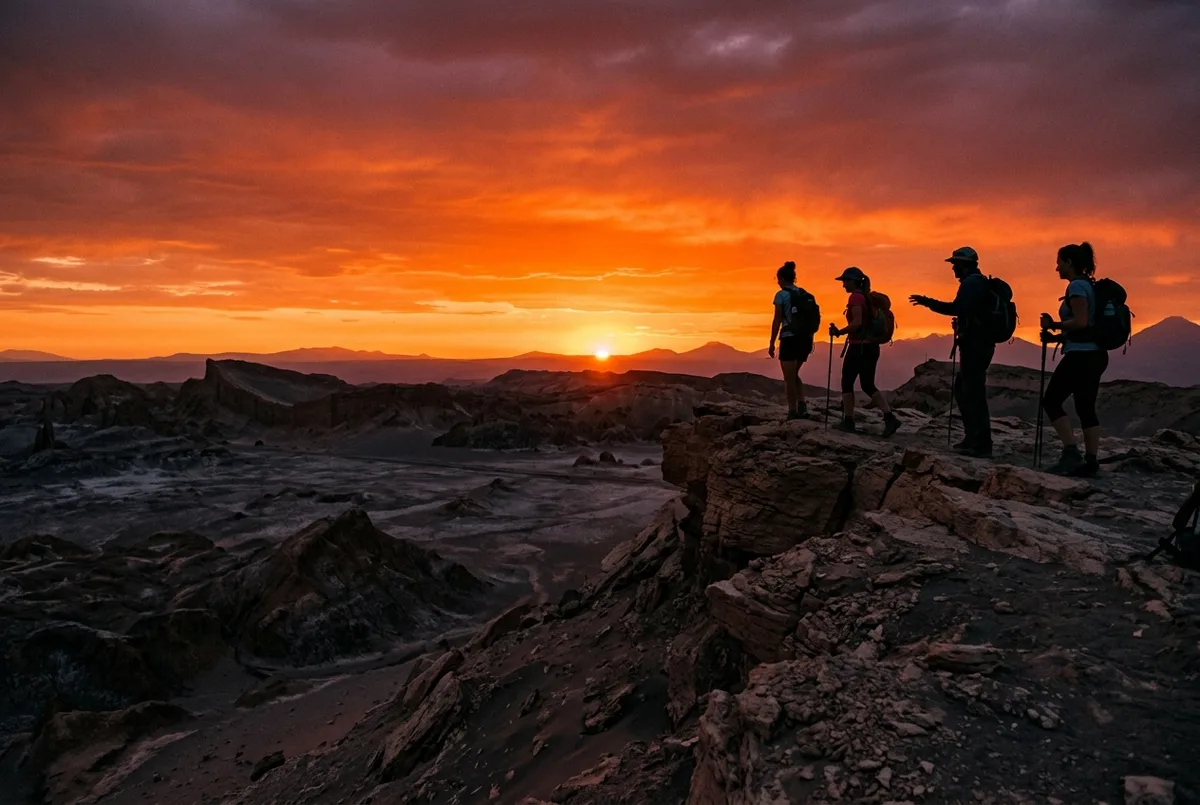
A valle de la luna sunset tour is built around one specific window of light, not a general afternoon in the desert. Pickup times shift with the season so the group reaches the final viewpoint right as the sun drops behind the Cordillera de la Sal, which means the schedule looks different in December than it does in June even though the route stays the same.
I would treat the timing as the whole reason to book this version rather than the standard daytime visit. The formations themselves do not change, but the light across them does, and that difference is what people are actually paying for when they choose the evening option over an earlier one.
The route runs through the Cordillera de la Sal, the salt mountain range that frames the whole valley, and the drive in alone gives your guide a chance to point out how wind and ancient lake sediment built the landscape over millions of years before you reach the first stop on foot.
What Time Does the Sunset Tour Actually Start?
Pickup happens in the mid to late afternoon, timed backward from sunset rather than fixed to a set clock time. Your operator confirms the exact pickup time on your booking once the date is set, since the gap between pickup and sunset shrinks in winter and stretches longer in summer.
My honest advice: do not assume the start time from a trip you took at a different time of year, and do not schedule anything tight right after you expect to return. Depending on the season, you might not get back into town until well after dark.
Check prices & dates
Ready to visit?
Book your tickets in advance: popular time slots sell out.
The Tres Marías go first, early enough in the visit that the light is still soft and the crowds have not built up yet. From there the group typically moves to a quieter overlook away from the busiest pull offs, before the tour finishes at Mirador de Kari, also called Piedra del Coyote, the valley’s main sunset viewpoint where the color show actually happens.
I would pay the most attention at Mirador de Kari specifically, since that final twenty five to thirty minutes is where the rock goes from gold to a genuinely deep red. My photo spot guide breaks down which angle and which exact minute works best at each stop if you are shooting seriously rather than just watching.
How Is This Different From the Daytime Visit?
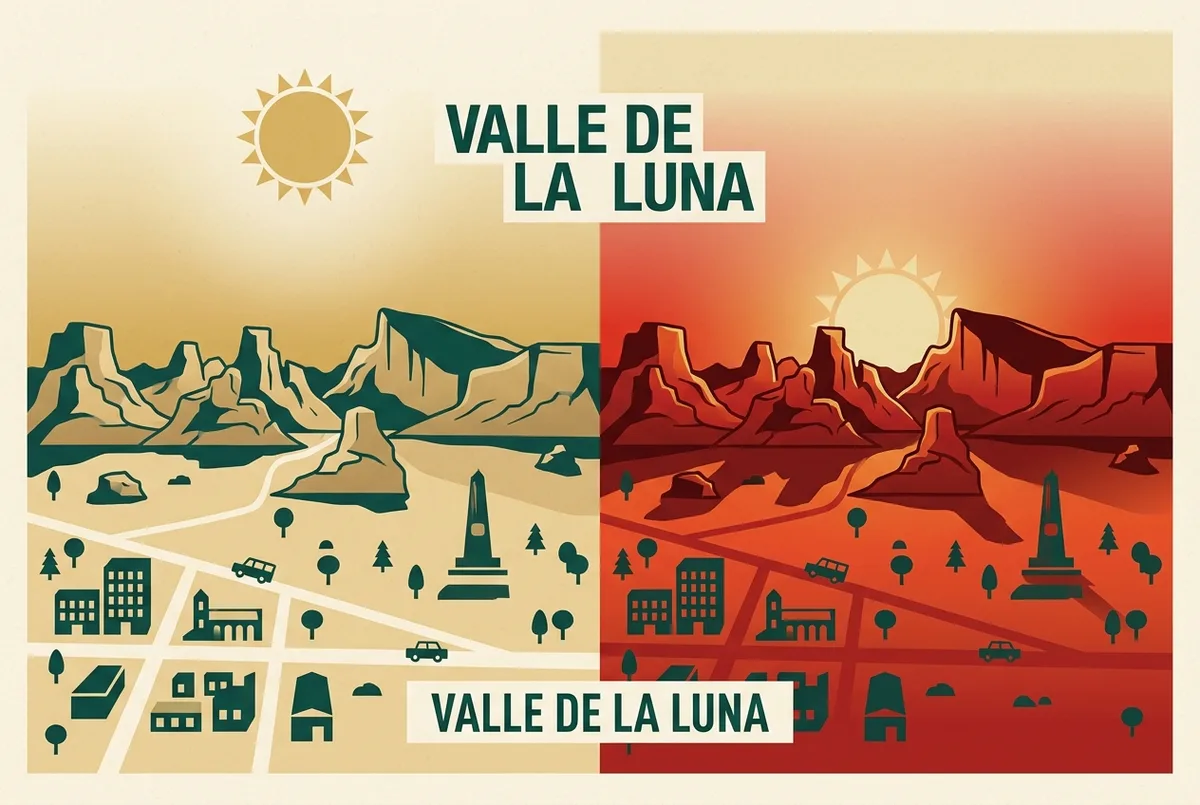
Mostly in light and temperature, not in which stops you visit. A daytime tour covers largely the same route, but the midday sun flattens the formations instead of carving long shadows across them, and you miss the color shift entirely since the sun is still high overhead.
My honest take: if photos or the general atmosphere matter to you at all, the sunset version wins every time. The only real case for daytime is a tighter overall schedule that cannot fit an evening excursion, or a preference for cooler morning temperatures over an evening chill. My full Valle de la Luna overview compares every format side by side if you are still deciding.
How Cold Does It Get Once the Sun Drops?
Noticeably colder than the daytime temperature suggests. The desert’s dry air loses heat fast once direct sun disappears, and you will be standing at the final viewpoint for the better part of half an hour waiting for the light to peak, which is exactly when the temperature drop catches people off guard.
I would never trust how warm the afternoon feels when you leave your accommodation. Pack as though the evening will be noticeably colder than it looks from your hotel room window, because it almost always is by the time you reach Mirador de Kari.
What Should You Wear and Bring?
A real jacket rather than a light layer, plus closed shoes for the loose sand and salt crust at every stop. A hat and gloves are worth packing too, even if they feel unnecessary when you set out, since standing still in the cold for half an hour is harder than walking through it.
I would also bring a fully charged camera or phone and nothing else distracting. Cold batteries drain faster once the temperature drops, and this is exactly the kind of landscape people regret under photographing once they are home and looking back through their trip.
Is the Sunset Tour Good for Photography?
Genuinely, yes, more than almost any other excursion in the desert. The shifting light across the salt formations gives you a constantly changing scene rather than one static shot, and the Tres Marías and Mirador de Kari both photograph differently depending on exactly when during the visit you catch them.
My honest recommendation: budget time to actually stand still and shoot rather than just snapping one photo and moving on. My photography viewpoints guide goes deeper into composition and timing at each specific stop if this is a priority for your visit.
Should You Book the Sunset Tour or the E-Bike Version?
Depends entirely on what you want out of the visit. The sunset tour is built around a fixed schedule and a specific light window, while an e-bike tour trades that structure for covering more ground yourself, at your own pace, with more physical effort involved.
I would pick the sunset version if the light and the overall atmosphere matter most to you, and the e-bike option if you would rather feel the desert under your own power and do not mind giving up the timed sunset payoff. My cycling guide explains the fitness level you actually need before you commit to that version.
Is This the Same Place as the Valle de la Luna in Bolivia?
No, and it is worth clearing up before you book. Several places share this name, including a well known site near La Paz, Bolivia. This sunset tour visits the Valle de la Luna in Chile’s Atacama Desert, a completely different location with its own geology and its own tours.
My breakdown of every Valle de la Luna sorts out which site is which if your search results are mixing them up, which happens more often than you would expect.
What Does the Entrance Fee Cover on a Guided Tour?
Some bookings include the park entrance fee in the tour price, while others leave it as a separate charge paid at the gate, depending on when you book. That fee itself is set by Chile’s forestry service and adjusted periodically, separate from whatever your tour operator charges for transport and guiding.
I would check your own booking confirmation rather than assume either way. My entrance fee and hours guide breaks down the current fee structure and what a guided tour typically saves you compared to paying independently.
Does a Sunset Tour Fit Into a Longer Desert Itinerary?
Yes, and it pairs especially well with an evening stargazing tour the same night, since the desert’s dramatic daylight and its dark sky are really two expressions of the same dry, high altitude geography. If your evening is open after sunset, doing both back to back makes for one full evening rather than two smaller separate outings.
Book the sunset version, confirm your exact pickup time once your date is set rather than assuming it from a different trip, and pack warmer than the afternoon temperature suggests. Budget real time at Mirador de Kari rather than rushing the final stop, since that last half hour is the entire reason this tour exists in its current form. For everything else this site compares, every Atacama tour and ticket is worth a look before you lock in your full schedule.
Frequently Asked Questions
What time does a valle de la luna sunset tour end?
Usually a little after full sunset, with the return drive adding another thirty to forty five minutes back into San Pedro de Atacama.
Is the sunset tour colder than the standard daytime visit?
Yes, noticeably. The temperature drops fast once the sun disappears, so pack a real jacket even if the afternoon feels warm.
Can I do both the sunset tour and stargazing on the same evening?
Yes, and it is a common pairing. Just confirm the pickup gap between the two leaves enough time to get back to your accommodation and out again.
Is the sunset tour better for photos than the daytime version?
Generally yes, since the shifting light creates a changing scene rather than one flat midday look across the formations.
Do I need a different ticket for the sunset tour versus the daytime one?
No. Both use the same park entrance, though whether the fee is bundled into your tour price depends on your specific booking.