Is the Atacama Desert Worth Visiting? Travel Guide
See prices From 70 EUR · Free cancellation available
Contents
Is the Atacama Desert worth visiting? Yes, and I say that with real confidence rather than the usual blanket tourism-board enthusiasm. This is one of the only places on Earth where you can float in a dense salt lagoon, walk across lunar-looking rock formations, and stand under one of the clearest night skies on the planet, all within a short drive of the same small town.
I will walk through exactly what makes this desert worth the trip, who I think it genuinely does not suit, and how the practical pieces, timing, getting here, altitude, and packing, all fit together once you have decided to go. Atacama chile travel asks more logistical planning of you than a typical beach trip does, so I think it is worth being honest about both sides before you book anything. Every tour compared on this site traces back to the same handful of attributes, price, duration, and how high in altitude each one climbs, so seeing what San Pedro de Atacama’s nine tours actually cost before you build a budget is worth doing early in your planning rather than after you have already committed to dates.
Why Do People Travel So Far to See the Atacama Desert?
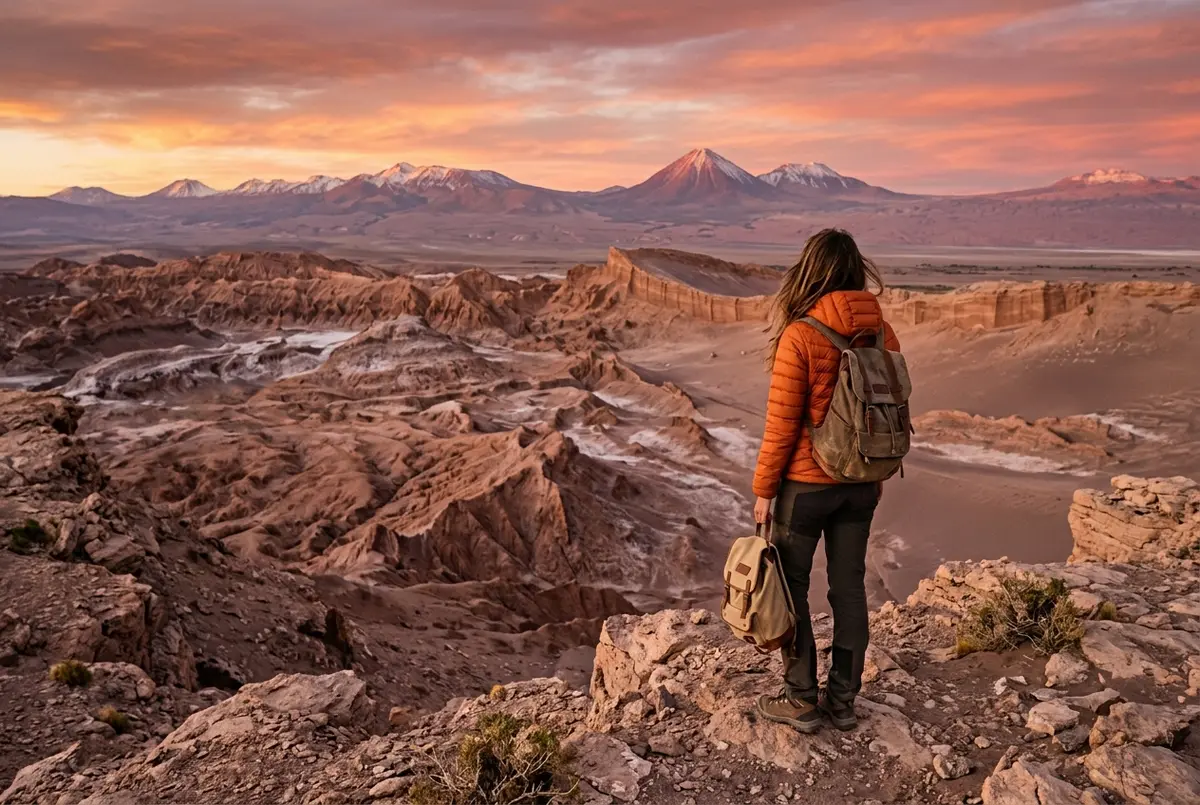
Because three things rarely combine anywhere else on Earth: near-zero light pollution for stargazing, genuinely lunar-looking rock formations shaped by wind and ancient salt deposits, and high-altitude lagoons where wild flamingos feed against a backdrop of volcanoes. Atacama desert tourism has grown around exactly those three draws, and I think all three earn the attention they get.
My honest take: I have seen deserts marketed as “otherworldly” plenty of times, and most of them do not actually deliver on that promise. This one genuinely does, especially once the sun drops low enough to throw long shadows across the Cordillera de la Sal or the sky turns properly dark away from town.
Check prices & dates
Ready to visit?
Book your tickets in advance: popular time slots sell out.
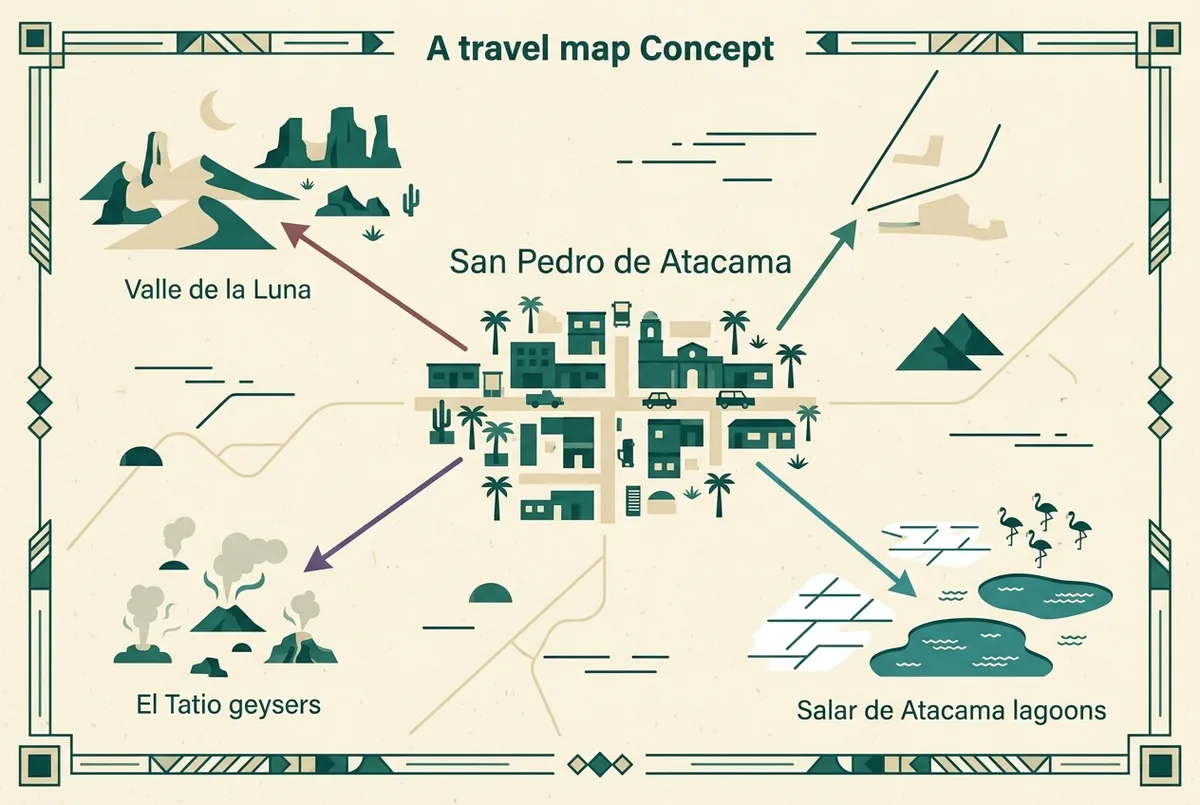
Travelers who dislike early starts, long drives, or altitude will have a harder time here than the glossy photos suggest. Several of the best excursions, El Tatio’s geysers especially, leave before dawn and climb past 4,000 meters, and there is no way around that if you want to see what makes them special in the first place.
I would be honest with yourself before booking a full itinerary here. If a 4am wake-up or a two-hour drive each way sounds miserable rather than tolerable, you can still have a great trip, you will just want to lean toward the lower-altitude, more forgiving excursions and skip the ones built around sunrise.
What Makes the Stargazing Here Different From Anywhere Else?
The combination of extremely low humidity, almost no cloud cover, and minimal artificial light around San Pedro de Atacama produces a sky that genuinely looks different from what most visitors have ever seen. This is exactly why major international observatories sit on the plateau above town rather than almost anywhere else on the planet.
My honest read: I would plan at least one evening here specifically around a stargazing tour, even if astronomy is not normally your thing. A moonless night under this sky is a different experience than a “nice view of the stars,” and I think it is worth experiencing at least once, whether you book a naked-eye session, a telescope tour, or a dedicated astrophotography outing.
Why Does Valle de la Luna Get So Much Attention?
Because the Cordillera de la Sal’s wind-carved dunes, ridges, and salt formations genuinely do resemble a lunar landscape, especially once the late afternoon light throws long shadows across them. It is close to town, needs no altitude acclimatization, and works as an easy first outing for almost anyone.
I would send any first-time visitor here before any other excursion, honestly. It is the clearest, most accessible introduction to why people travel across the world for this specific desert.
What About the Salt Lagoons and Flamingos?
The Salar de Atacama and its altiplanic lagoons add a completely different kind of landscape: dense, mineral-rich water where you can float effortlessly, and shallow salt flats where wild flamingos feed against a backdrop of distant volcanoes. These stops sit at considerably higher altitude than Valle de la Luna, generally above 4,000 meters, so they ask more of your body than the lower-altitude excursions do.
My honest take: I would not skip this part of the desert just because it asks for more planning. Floating in Laguna Cejar or standing at Chaxa Lagoon watching flamingos feed is genuinely one of the more memorable things on offer here, and the extra altitude planning is worth it for most healthy travelers.
How Many Days Should You Actually Plan For?
Most visitors need two to three full days to cover stargazing, Valle de la Luna, and one full-day excursion like El Tatio or the altiplanic lagoons without rushing. A single day still works if that is genuinely all you have, but it means choosing one or two highlights rather than attempting everything.
I would not try to compress this desert into a rushed overnight stop if you can avoid it. My Atacama desert itinerary guide breaks down exactly what a realistic one-day, two-day, and three-day plan each look like, and how I would personally allocate the days if I only had a few.
How Do You Actually Get Here?
By flying into Calama, then transferring about 1.5 hours by road to San Pedro de Atacama, since there is no realistic way to reach this desert from Santiago by road the same day. This surprises a lot of first-time visitors who assume Santiago works as a day-trip base, when it actually sits roughly 1,600 kilometers to the south.
My honest advice: book your Calama-to-San Pedro transfer before you land rather than figuring it out on arrival. My full guide to getting to San Pedro de Atacama covers the real route from both Santiago and Calama in more depth, including the transfer options once you land.
What Should You Know About Altitude Before You Go?
San Pedro de Atacama itself sits at a tolerable 2,400 meters, but several of the desert’s best excursions climb past 4,000 meters, where altitude effects become more likely for even healthy travelers. The jump matters more than the absolute number, since going from sea level straight into a sunrise trip at 4,300 meters asks a lot of your body in a short window.
I would spend at least a day or two at San Pedro’s lower elevation before booking anything that climbs much higher. My altitude sickness guide for San Pedro de Atacama goes through exactly which excursions climb highest and how to pace your trip around that.
When Is the Best Time of Year to Visit?
Any time of year works reasonably well here, since the desert stays dry across almost the entire calendar, though a brief altiplanic rainy season in the Southern Hemisphere summer can occasionally close high-altitude roads. Daytime heat and cold nights are a constant regardless of season, so the real planning question is less about which month and more about packing for both extremes.
My honest take: do not let the search for a single “best month” slow down your planning. My best time to visit the Atacama Desert guide breaks down the seasonal weather pattern and the rainy season risk in more depth if timing still matters to your trip.
What Should You Pack?
Layers for a genuinely large day-to-night temperature swing, strong sun protection for the high-altitude UV, and closed shoes for sandy, uneven terrain at most viewpoints. This desert’s climate asks for a different packing list than a typical warm-weather trip, since the same day can swing from hot sun to near-freezing cold within a few hours.
I would pack more layers than instinct suggests, honestly. My full Atacama desert packing guide covers the complete list, since the right gear here matters more than on a typical beach or city trip.
Is San Pedro de Atacama Worth Visiting If You Are Not Into Photography?
Yes, genuinely. The landscapes here photograph beautifully, which is why so many trip reports lean heavily on the visuals, but the experience itself, standing at a sunset viewpoint, floating in a salt lagoon, watching steam rise off a geyser field at sunrise, holds up perfectly well without a camera in hand at all.
My honest take: I would not let a lack of interest in photography talk you out of this trip. The physical experience of these landscapes is the real draw, and the photos are just a side effect of being somewhere genuinely striking.
Is the Atacama Desert Good for Families?
With the right excursions chosen, yes. Lower-altitude options like a Moon Valley sunset tour or the Laguna Cejar floating tour suit families well, while the highest-altitude, earliest-starting excursions like El Tatio are a harder ask for younger kids specifically because of the cold and the early wake-up rather than anything dangerous about the landscape itself.
I would build a family itinerary around the lower-altitude excursions first and treat anything above 4,000 meters as optional depending on how your specific kids handle an early morning and a cold wait outside.
Is It Worth Visiting If You Are Short on Time?
Yes, even a single full day covers one genuinely memorable excursion, though you will have to prioritize rather than attempt everything this desert offers. I would pick one landscape, Valle de la Luna at sunset is my honest first choice for a short visit, and pair it with a stargazing tour the same evening if your schedule allows.
My take: a short stop here still beats skipping this desert entirely, as long as you go in with realistic expectations about how much you can actually fit into the time you have.
Is the Atacama Desert Worth Combining With a Longer Chile or Bolivia Trip?
Yes, and this is actually how most visitors end up here, as one stop on a longer South American itinerary rather than a standalone destination booked on its own. The desert pairs naturally with Santiago at one end and, for travelers with extra time, an overland trip into Bolivia at the other, since several operators run a multi-day route across that exact border.
My honest take: I would not treat this desert as a quick detour squeezed between two other destinations if I could avoid it. Give it the two to three full days it deserves, then build the rest of a longer Chile or Bolivia trip around that core.
Does This Desert Suit a Solo Traveler as Well as a Group?
Yes, genuinely well. Most excursions run as shared group tours by default, which makes this one of the easier regions in South America to explore solo, since you are placed with other travelers rather than needing to arrange a private vehicle just to see anything.
I would recommend this desert to a solo traveler without hesitation. The shared stargazing and sunset tours in particular tend to be social by nature, since everyone is standing at the same viewpoint waiting for the same light or the same dark sky.
Is the Atacama Desert Safe to Visit?
Yes, in the way most well-run tourist regions are safe: the real risks here are altitude and sun exposure rather than crime or infrastructure. San Pedro de Atacama itself is a small, walkable town that sees a steady stream of international visitors, and the excursions run through established operators with guides who know the terrain well.
My honest take: I would worry far less about safety in the usual travel sense and far more about pacing your altitude exposure sensibly. Respect the altitude, drink more water than feels necessary, and this is a genuinely low-risk destination to explore.
What Do First-Time Visitors Get Wrong About This Desert?
Two things, mostly. First, assuming Santiago works as a convenient base, when it actually sits roughly 1,600 kilometers away and adds a full day of travel either direction. Second, underestimating how cold the nights and the pre-dawn excursions get, since the daytime heat gives a misleading first impression of the climate here.
I would plan around both mistakes before you arrive rather than after. Book your Calama transfer in advance, and pack genuinely warm layers even if the forecast for your arrival day looks hot. Getting these two details right in advance saves more frustration than almost anything else on this list, and it is the one piece of honest, practical advice I would pass on before anything else about the landscapes themselves.
My Honest Recommendation
Is the Atacama Desert worth visiting? Yes, specifically for the stargazing, the lunar landscapes of Valle de la Luna, and the altiplanic lagoons that genuinely do not have a close equivalent anywhere else I have come across. I would plan at least two to three days if your schedule allows, spend a lower-altitude day before any high-altitude excursion, and pack for a bigger day-to-night temperature swing than you probably expect. If early starts, long drives, or altitude genuinely sound unbearable to you rather than just mildly inconvenient, lean toward the gentler, lower-altitude side of this desert’s lineup rather than skipping it entirely. However you plan to split your days, every San Pedro de Atacama tour and ticket this site compares is worth browsing before you commit to a full schedule. For background on the desert itself beyond what any single tour listing covers, Wikipedia’s Atacama Desert entry is a solid, independent starting point.
Frequently Asked Questions
Is the Atacama Desert worth visiting for someone who is not into astronomy?
Yes. Stargazing is one highlight among several, and the lunar landscapes, salt lagoons, and flamingo-filled salar stand on their own regardless of your interest in the night sky.
How many days should I plan for a trip to the Atacama Desert?
Most visitors need two to three full days to see the main highlights without rushing. A single day still works if you prioritize one excursion.
Is the Atacama Desert hard to get to?
It takes planning, since there is no road route from Santiago the same day. The real route is a flight into Calama followed by a short road transfer.
Does altitude make the Atacama Desert difficult to visit?
San Pedro de Atacama itself sits at a mild 2,400 meters. Only specific excursions climb higher, so most of a trip here is manageable for healthy travelers.
Is the Atacama Desert good for a family trip?
Yes, if you lean toward the lower-altitude excursions. The highest, earliest-starting tours are a harder ask for young kids specifically.