Atacama Desert Stargazing Tours: The Complete Guide
See prices From 26.53 EUR · Free cancellation available
Contents
Atacama desert star gazing is as good as its reputation, and I’d say it’s one of the few travel experiences that genuinely lives up to the hype. This is one of the driest, highest, and darkest inhabited places on the planet, which is exactly why some of the world’s most powerful telescopes sit on the plateau above San Pedro de Atacama rather than almost anywhere else.
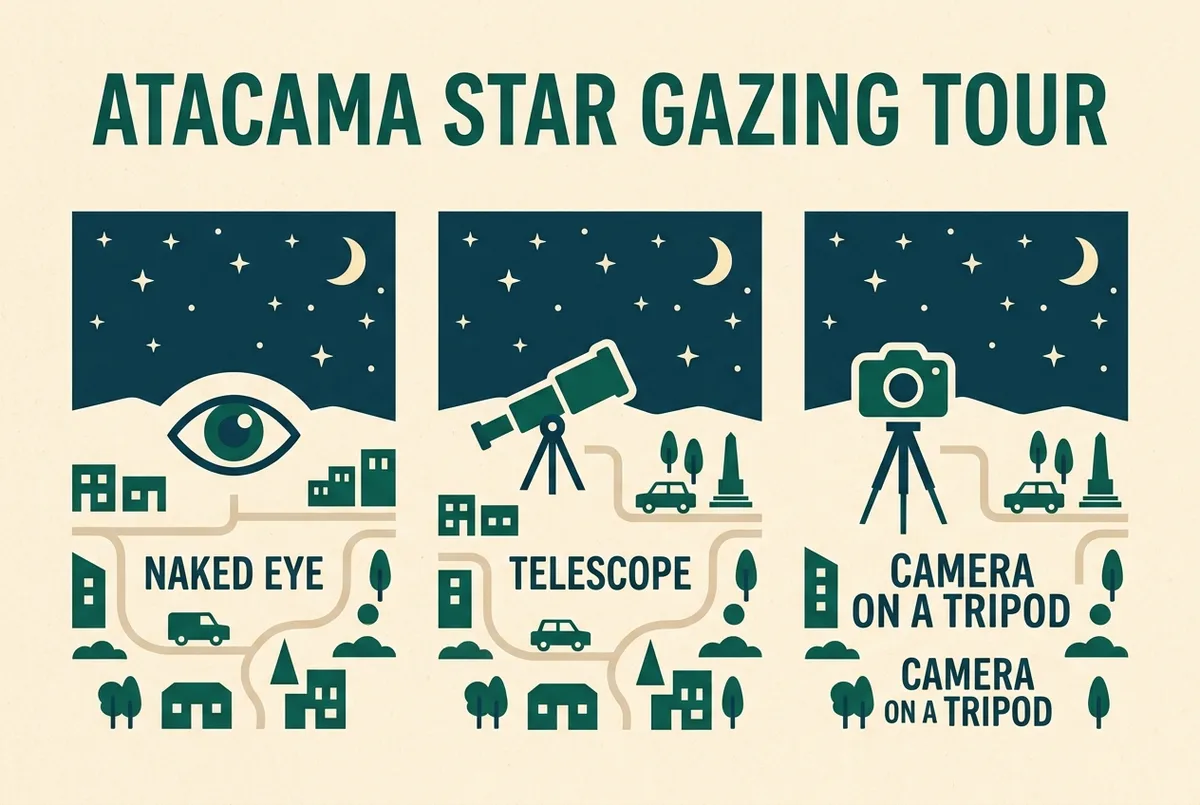
I’ll walk through what actually makes the sky here different, the real choice between a naked eye tour, a telescope session, and a dedicated astrophotography outing, and which one I’d book depending on what you want out of the night. Price, duration and what’s included are exactly the attributes that separate one Atacama tour from the next, so it’s worth comparing all nine San Pedro de Atacama tours by price and duration before you commit to an evening plan.
What Makes Atacama Desert Star Gazing So Good?
Three things stack together here in a way they rarely do anywhere else: almost no cloud cover, extremely low humidity, and minimal artificial light for miles around San Pedro de Atacama. That combination is precisely why international observatories, including the ALMA array on the Chajnantor plateau, were built in this desert instead of somewhere more convenient.
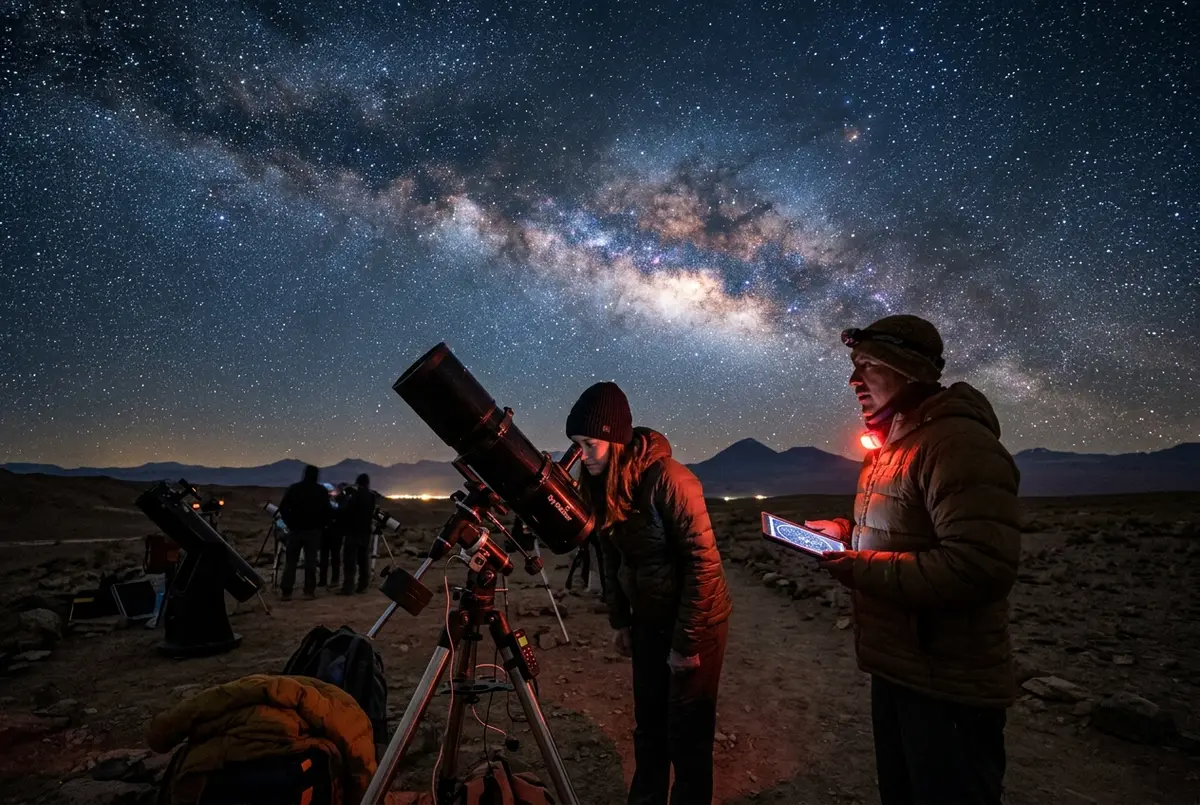
I’d put it this way: most people who think they’ve seen a dark sky haven’t, not really. A truly moonless night in this desert shows the Milky Way as a dense, almost solid band rather than a faint smudge, and stars that are completely invisible from a typical suburb show up as an actual field of light. If you’ve never stood under a sky like that, I think it’s worth planning at least one evening here specifically around it.
The altitude helps too, even away from the highest observatory sites. San Pedro de Atacama itself sits above 2,000 meters, which means there’s simply less atmosphere between you and the stars than at sea level, and less atmosphere means less distortion and less scattered light. Stack that on top of the dryness and the lack of nearby cities, and you get a sky that genuinely earns comparisons to places like the Canary Islands or the deserts of Namibia, two of the only other spots on Earth that come close.
Check prices & dates
Ready to visit?
Book your tickets in advance: popular time slots sell out.
Naked Eye, Telescope, or Astrophotography: Which Tour Should You Book?
This is the real decision, more than which specific operator you pick. A standard guided tour mixes naked eye orientation to the southern sky with a telescope session, usually covering the Moon’s craters, Saturn’s rings, and a few deep sky targets over roughly an hour. A dedicated astrophotography session runs longer, caps the group at a smaller size, and builds in tripod time and exposure coaching rather than treating photography as an afterthought.
My honest recommendation: if this is your first night of atacama star gazing, book the standard telescope tour. It covers the highlights without asking you to manage camera settings in the dark, and it’s priced lower than a specialized session. If you already shoot long exposure photography as a hobby, I’d skip straight to the astrophotography option instead, since a casual tour’s pace will frustrate a photographer who wants real time behind the camera. My astrophotography guide breaks down exactly what that upgrade involves.
How Dark Does the Sky Actually Get Here?
Genuinely dark, to the point that the Milky Way casts a faint shadow on a clear, moonless night away from town lights. San Pedro de Atacama itself has some ambient light, which is exactly why every tour drives a short distance outside town to a site chosen specifically for minimal light pollution before setting up.
I think this detail matters more than people expect going in. A tour that skips the drive and just points a telescope up from a hotel courtyard is cutting the one thing that makes this desert special in the first place. If an operator’s listing doesn’t mention relocating to a dedicated viewing site, I’d ask about it directly before booking.
What Happens During a Guided Atacama Stargazing Tour?
A van collects you from your accommodation shortly after dark and drives a short distance to the viewing site. Your guide starts with a naked eye orientation, pointing out the Southern Cross and the Magellanic Clouds, both of which are only visible from the southern hemisphere, before moving into roughly an hour of telescope viewing split across the group.
A warm drink, commonly tea, hot chocolate, or a pisco sour depending on the operator, breaks up the session partway through, and most tours close with a mix of Western and Andean constellation stories. The Andean cosmovision reads dark patches within the Milky Way as animal shapes rather than connecting bright points into figures, which I find genuinely more interesting than the Greek mythology most of us already know.
Is the ALMA Observatory Part of Any Commercial Tour?
No, not in the way most people assume. ALMA is a working radio telescope array, not a nightly tourist stargazing experience, and it runs its own separate, limited, reservation based visiting program rather than slotting into a commercial night tour. If seeing a professional observatory up close is specifically what you’re after, that’s a different booking entirely from an evening stargazing excursion.
I’d treat these as two separate trips with two separate purposes. My ALMA Observatory visitor guide covers exactly how that limited visiting program works and why it’s such a different experience from the tour described above.
When Is the Best Time to Go Stargazing in the Atacama?
Any clear night works reasonably well here, since the desert’s dryness holds steady across the year, but a new moon window shows noticeably more detail in the Milky Way than a night near a full moon. I’d check the lunar calendar for your travel dates before locking in a specific evening if the sky is the main reason you’re here.
My honest take: don’t let moon phase stop you from booking if your schedule is fixed, since even a partially moonlit night here beats a clear night almost anywhere else. My best time for stargazing guide goes deeper into moon phase planning and known meteor shower windows if you have any flexibility on dates.
Is There a Best Season for Atacama Desert Star Gazing?
Not really a best season so much as a best sky condition, since this desert stays dry across the calendar in a way few other places do. Southern hemisphere winter nights, roughly June through August, run colder and darker earlier in the evening, while summer nights stay warmer but the sky itself is just as clear.
My honest take: don’t plan your whole trip around a specific month for the sky’s sake alone. I’d pick your travel dates based on everything else you want to see and do here, then simply check the moon phase once you already know your nights in town.
How Much Does a Stargazing Tour Cost in San Pedro de Atacama?
Prices for a standard guided session start well below what most multi-hour desert excursions cost, since this tour runs just a couple of hours and needs no entrance ticket to a reserve. A dedicated astrophotography upgrade typically costs more, reflecting the smaller group size and longer session length.
I think this is one of the best value bookings in the entire desert for what you get. My stargazing tour cost guide breaks down the real price range pulled directly from current listings and what actually drives the spread between operators.
Should You Pair Stargazing With a Daytime Tour?
I’d say yes, and specifically with a sunset tour earlier the same evening. The desert’s dramatic daytime light and its dark night sky are really two expressions of the same dry, high altitude geography, and doing both on the same day makes for one genuinely full evening rather than two separate, smaller outings.
My honest pick: book a sunset excursion that ends as the light fades, then head straight into a stargazing tour once full dark arrives. It’s a logical pairing that most first time visitors don’t think to plan until someone points it out, so I’m pointing it out now. The two tours typically run with different operators, so double check that the pickup gap between them actually leaves enough time to get back to your accommodation and out again, rather than assuming the timing lines up on its own.
Who Should Book a Private Stargazing Tour Instead of a Group One?
Couples celebrating something specific, families with young kids who need flexibility, and serious photographers who don’t want to share telescope time with a dozen strangers. A private booking costs more, but it buys you control over pacing and target selection that a group tour simply can’t offer, including the freedom to linger on one target for as long as you want instead of rotating through the group on a set schedule.
I’d only recommend paying for private if one of those situations actually applies to you. For most solo travelers and casual groups, a shared tour delivers the same sky and the same telescope quality at a meaningfully lower price, and I wouldn’t spend more than necessary just for the sake of it. A group of eight to twelve people still gets plenty of individual telescope time across a full hour, so I wouldn’t assume a shared tour means a rushed, crowded experience just because it’s cheaper.
What Should You Wear for an Atacama Night Sky Tour?
Real layers, not a light jacket. Daytime temperatures in this desert can be genuinely warm, which catches people off guard once the sun drops and the dry air lets heat escape fast. You’ll be standing outside for most of the session, so I’d pack more warmth than the forecast seems to suggest.
My honest advice: bring gloves and a hat even if you think you won’t need them. Standing still for an hour in dry desert cold catches most first-time visitors off guard, since it’s easy to underestimate how quickly the chill sets in once you stop moving.
Do You Need to Acclimatize Before a Night Tour?
Not really, and this is one of the few desert excursions where altitude barely factors in. San Pedro de Atacama itself sits at roughly 2,400 meters, and the viewing sites used for a standard stargazing tour don’t push meaningfully higher than that. Compare this to a sunrise trip at El Tatio, which climbs past 4,300 meters, and the difference is obvious.
I’d treat a stargazing tour as one of the easiest bookings on your entire itinerary for this exact reason. If you’re worried about altitude in general, this is a safe evening to schedule even on your first night in town, before you’ve had any time to adjust.
Is a Stargazing Tour Good for Kids?
Generally yes, with a caveat on timing rather than content. The science and the storytelling both work well for curious kids, but the start time, usually a couple of hours after dark, can run past a younger child’s normal bedtime depending on the season.
My honest read: for families with older kids who can handle a later night occasionally, I’d book this without hesitation. For a family with very young children, I’d weigh the late start against how your specific kid handles a disrupted sleep schedule before committing to a date.
What Happens If It’s Cloudy on Your Scheduled Night?
Most operators either reschedule you to another night at no extra cost or offer a refund if cloud cover genuinely blocks the sky, since a ruined tour is bad for their own reputation too. Clear nights are the norm here rather than the exception, so this comes up far less often than it would almost anywhere else, but it’s still worth confirming the specific policy before you pay.
I’d ask about the reschedule policy directly in the booking confirmation rather than assuming it’s covered. It only takes a minute, and it’s the one thing that genuinely protects you if the one unlucky cloudy night of your trip happens to land on the evening you’d booked.
How Does This Compare to Other Atacama Evening Activities?
Stargazing is genuinely the desert’s standout evening option, since almost nothing else here runs after dark and competes with it. During the day, the broader catalogue of excursions, from Moon Valley to the altiplanic lagoons, covers the desert’s landscapes, while this is the one tour built entirely around what happens once the sun goes down.
If you’re still working out how a night tour fits into a longer trip, my Atacama travel guide covers trip length and pacing more broadly, and if you’d rather have a local operator handle the whole itinerary for you, my guide to choosing a tour operator in San Pedro de Atacama walks through what separates a reliable booking from a risky one.
My Honest Recommendation
For a first visit, I’d book the standard guided telescope tour rather than jumping straight to a specialized astrophotography session, and I’d pair it with a sunset excursion earlier the same evening if your schedule allows it. Check the moon phase for your travel dates if the sky matters more to you than the exact day, and dress far warmer than the daytime temperature suggests. If you’re still building out the rest of your trip, it’s worth browsing every Atacama tour and ticket on this site before you lock in a full itinerary. For background on why observatories cluster in this exact desert, the ALMA Observatory is a reliable official source worth a look before you go.
Frequently Asked Questions
Is Atacama desert star gazing worth doing if I’m only in San Pedro de Atacama for one night?
Yes. A standard guided session runs just a couple of hours, which makes it easy to fit into even a single overnight stay without reshuffling the rest of your plans.
Do I need my own telescope or camera gear?
No, a telescope and a guide are included in a standard tour. Only a dedicated astrophotography session asks you to bring or rent specific camera equipment.
Will a full moon ruin a stargazing tour?
It washes out fainter detail like the Milky Way but doesn’t ruin the experience outright. Bright planets and major constellations stay clearly visible regardless of moon phase.
How cold does it get during a night tour?
Noticeably colder than daytime temperatures suggest, since the dry desert air loses heat fast after sunset. Real layers matter even if blankets are provided on the tour.
Can beginners join without any astronomy knowledge?
Yes, these tours are built for beginners by design. Your guide explains everything from scratch, and no prior astronomy knowledge is expected or needed.